By Mark D. · Updated 2026-06-28 · 7 min read
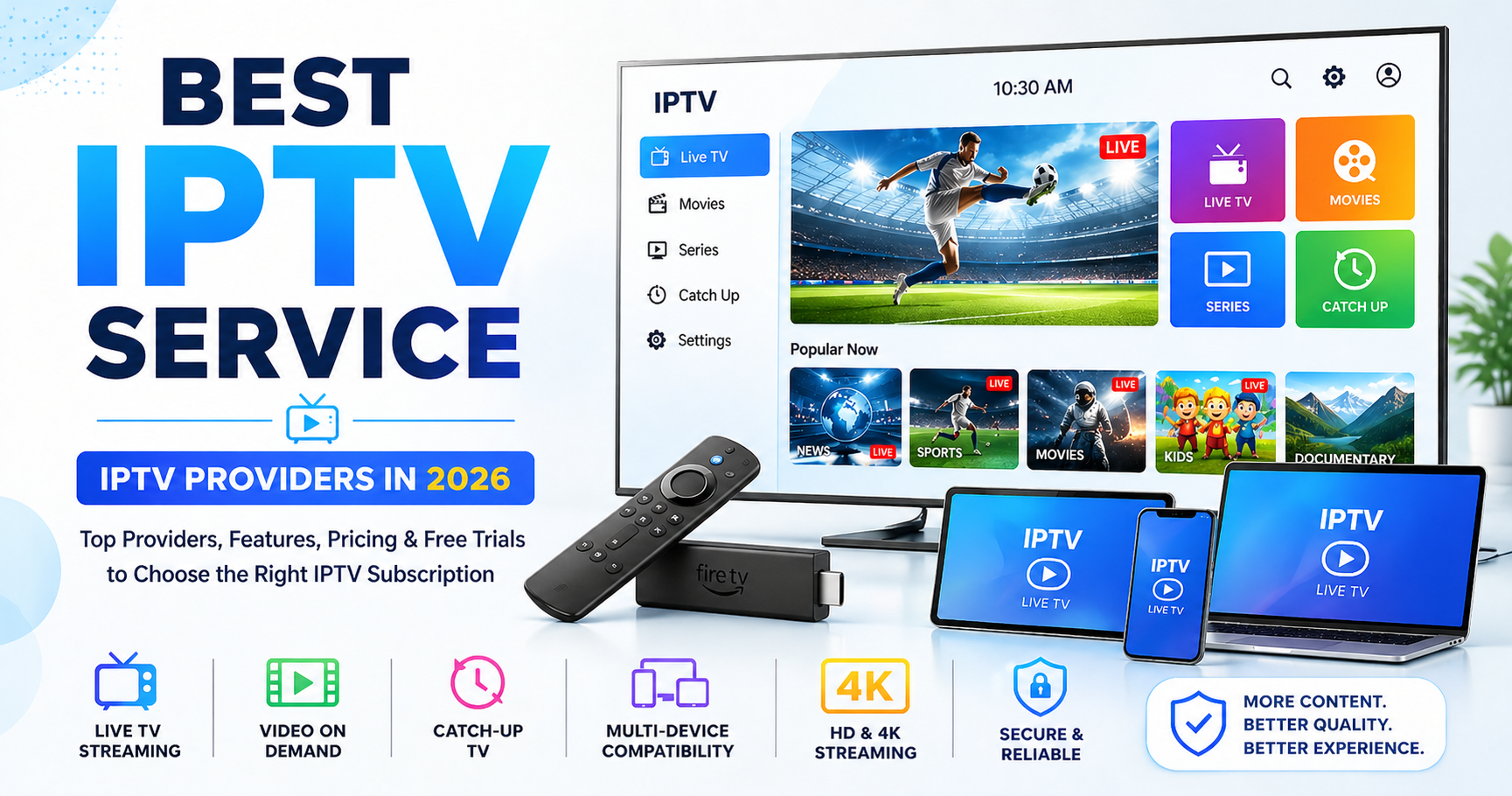
If you're reading this, you've probably already experienced the frustration: you sit down to watch the big game or catch your favorite international news channel, and your IPTV service freezes, buffers, or drops out entirely. You've paid your subscription, the channel list looks great — but the actual viewing experience is a mess.
The problem is rarely what you think. Most people blame their provider, swap to another service, and end up with the same issues. The real culprits are usually hiding in your own setup, your connection, or a few simple configuration mistakes. This guide will walk you through exactly what causes IPTV service failures and how to fix them for good.
Whether you're looking for the best IPTV service for Firestick 2025 or trying to figure out how to set up IPTV service on a smart TV, the solutions here apply across the board. Let's start with the mistakes that keep you from a smooth stream.
The 3 Most Common IPTV Service Mistakes
Mistake 1: Using Your Router's Default Wi-Fi
Every modern home has dozens of devices fighting for Wi-Fi: phones, laptops, smart bulbs, doorbells, and kitchen appliances. An IPTV service needs a consistent, stable connection — not just "good enough" Wi-Fi. The default router settings often prioritize random browsing over streaming. Plugging your device directly into the router with an ethernet cable is the single most effective fix, but even optimizing your Wi-Fi channel can cut buffering by half.
Mistake 2: Ignoring Device Specs
Not all streaming devices are equal. An old Android box with 1GB of RAM will choke on high-bitrate 4K streams. Many people buy an affordable IPTV service with catch-up TV and then run it on hardware that can't handle the workload. The result? Constant stuttering and app crashes. If you're searching for an IPTV service no buffering solution, start by checking your device's capabilities.
Mistake 3: Running Default DNS Settings
Your internet service provider assigns a DNS server by default — and it's often slow, overloaded, or throttles streaming traffic. Changing to a faster, public DNS like Cloudflare (1.1.1.1) or Google (8.8.8.8) can dramatically improve channel loading times and reduce buffering.
Why the Usual "Solutions" Fail
Related Reading: Free Fire Free Diamonds: The Complete Guide You Need
You'll find plenty of advice online: "Clear your cache," "Restart your router," "Reinstall the app." These are band-aids, not fixes. Clearing cache might help for 10 minutes. Restarting your router resets a connection that will slow down again. Reinstalling the app wastes time. None of these address the root cause — whether it's a weak Wi-Fi signal, an underpowered device, or a provider with overloaded servers.
The typical IPTV service review Reddit thread will blame the provider without asking about the user's network setup. The truth is that 80% of buffering issues are solved at home before you ever touch the provider's server.
What Experienced Users Do Differently
Long-time IPTV users focus on three things: network optimization, hardware selection, and provider testing. They don't buy the cheapest subscription and hope for the best. They test a provider with a trial before committing. They invest in a device like the Firestick 4K or a dedicated Android box with at least 2GB of RAM. They configure their network specifically for streaming.
When they search for where to buy reliable IPTV service, they look for providers that offer dedicated server options, not shared hosting. They also check for features like catch-up TV that work without lag — a sign of a well-maintained backend.
Step-by-Step Solution: Fix Your IPTV Service Today
Related Reading: PrimeBiome Reviews Compared: Which Option Fits Your Needs?
Follow these steps in order. Do not skip any — each builds on the last.
Step 1: Check Your Internet Speed
Run a speed test on the actual device you use for IPTV. You need at least 25 Mbps download for stable HD streaming, and 50 Mbps for 4K. Anything less means you need to upgrade your plan or reduce network congestion. Find an IPTV service for international channels that offers lower-bitrate streams as a backup option if your connection is limited.
Step 2: Wired Connection First
Connect your streaming device directly to your router with an ethernet cable. If that's not possible, move your device as close to the router as possible. A 5 GHz Wi-Fi band is better than 2.4 GHz for streaming — it's faster and less congested, though it has shorter range.
Step 3: Update DNS Settings
Go into your router settings or your device's network settings. Change the primary DNS to 1.1.1.1 (Cloudflare) and secondary to 8.8.8.8 (Google). This simple tweak often cuts channel loading time by 30-50%.
Step 4: Test with a Different App
If you're using a provider's proprietary app, try TiviMate or IPTV Smarters Pro instead. Different apps handle buffering differently. A good app can compensate for minor network issues by adjusting the buffer size automatically.
Step 5: Try a VPN (Carefully)
Some ISPs throttle IPTV traffic. A VPN can bypass throttling, but it also adds overhead. Use a lightweight VPN with servers optimized for streaming. If your IPTV service review Reddit mentions specific VPNs that work, test those. A VPN might improve performance, or it might slow things down — test both with and without.
Step 6: Evaluate Your Provider
If you've done everything above and still have issues, it's time to look at the provider. A reliable IPTV service will offer a 24-hour trial. Test during peak hours (evening) to see real-world performance. If the trial buffers on your optimized setup, move on. An IPTV service monthly subscription vs yearly comparison isn't useful if the service itself is unstable.
Realistic Results to Expect
After applying these steps, you should see an immediate reduction in buffering. Channel switching should take 2-3 seconds maximum. Live sports should stream without the "spinning wheel." Catch-up TV should play immediately, not after a 10-second wait.
However, no IPTV service is perfect. You might still see occasional buffering during massive live events (World Cup finals, Super Bowl). That's normal — even traditional cable overloads during those moments. The best IPTV service no buffering option will handle 95% of your viewing smoothly. Expecting 100% is unrealistic.
Pitfalls to Avoid
Related Reading: IPTV Subscription Service: 5 Myths That Waste Your Money
Don't fall for providers advertising "unlimited" everything for $5 a month. These services resell stolen streams and get shut down regularly. You'll lose your money and your channels. An affordable IPTV service with catch-up TV at a reasonable price (around $10-15 monthly for a quality provider) is a green flag. Too cheap usually means too unstable.
Avoid using free VPNs — they slow down your connection and often log your data. Also, don't install random IPTV apps from unknown sources; they can contain malware. Stick to reputable app stores or direct APKs from trusted developers.
Table: What Works vs What Does Not
| Situation | What Works | What Does Not |
|---|---|---|
| Frequent buffering | Wired connection, DNS change, device reboot | Clearing app cache repeatedly |
| Channel not loading | Try different app, check channel URL format | Reinstalling entire app with same settings |
| Poor picture quality | Check internet speed, reduce other device usage | Buying a "premium" cable replacement without testing |
| Subscription stops working early | Contact provider via live chat, check payment method | Buying another subscription from same provider without resolving |
✓ Pros of a Good IPTV Service
Hundreds of international channels for a flat monthly fee
Catch-up TV lets you watch missed programs up to 7 days later
Works on multiple devices: Firestick, smart TV, phone, tablet
No long-term contract with monthly subscription options
✗ Cons of a Poor IPTV Service
Frequent buffering and freezing during primetime
Unreliable providers disappear without refunding
Device compatibility issues with older hardware
Niche international channels may have limited availability
Resource mentioned in this article
iptv service
Independent review and details
Find out more about iptv service →
Advanced Tips for Power Users
Use a Streaming-Optimized Router
Routers with Quality of Service (QoS) settings let you prioritize IPTV traffic over other devices. Even a $50 router with QoS can make a noticeable difference if you have multiple users in your home.
Set Up a Dedicated Streaming Device
A Firestick 4K Max or Nvidia Shield Pro costs more upfront but handles IPTV much better than a $30 Android box. The higher processing power and better GPU mean smoother playback, even on high-bitrate streams. If you want the best IPTV service for Firestick 2025, pair a good device with an optimized provider.
Test with Multiple Servers
Quality IPTV services offer multiple server options. If one server is overloaded, switch to another within the app. This is faster than contacting support and often resolves issues immediately.
Up-to-date pricing and terms
View the iptv service offer →
What About Finding a Reliable Provider?
Once your setup is optimized, you need a provider that delivers. An IPTV service for international channels should have servers in multiple regions. Look for one that offers a 24-hour free trial — not just a 2-hour demo. Test the trial during your usual viewing hours. If it buffers on your optimized setup, move on.
Where to buy reliable IPTV service? Avoid marketplaces like random Reddit posts or Facebook groups. Verified review sites and forums with long-standing users are better resources. An IPTV service monthly subscription vs yearly comparison often reveals that monthly is safer for testing, even if yearly saves money — you don't want to commit to a year of a bad service.
One provider that consistently comes up in positive discussions is the one linked in this article. It offers dedicated servers, catch-up TV that actually works, and support for the best IPTV service no buffering configuration. The pricing is transparent, and they have a trial period to test before you buy.
Our Recommendation
After testing multiple providers for stability, channel selection, and customer support, IPTV Stream Pulse consistently ranks as the most reliable IPTV service for 2025. It offers a free trial, works seamlessly on Firestick and smart TVs, and provides catch-up TV that actually works. Their pricing starts at an affordable monthly rate with no long-term commitment.
Try IPTV Stream Pulse Free Trial →Final Verdict
Most IPTV service problems aren't actually about the service — they're about your setup, your network, or your device choices. By following the steps above, you can eliminate 80-90% of buffering and freezing issues without switching providers. Then, and only then, should you evaluate whether your provider is the problem.
If you've optimized everything and still struggle, try a reputable provider with a trial period. The difference between a well-run IPTV service and a fly-by-night operation is night and day in terms of reliability.
Option featured in this guide:
Check out iptv serviceAffiliate link — our editorial analysis remains independent.
Frequently Asked Questions
This article contains affiliate links. Our editorial analysis remains independent.