By Sarah M. · Updated 2026-07-06 · 12 min read

A stack of garden plans sits on your desk. You've watched hours of homesteading videos. Your compost bin is finally producing rich soil. Yet your neighbor—the one who just bought a single guide three months ago—already has a thriving vegetable patch, rainwater system, and three happy hens. What does he know that you don't?
The difference often isn't effort or budget. It's the quiet set of assumptions that steer beginners wrong. Many new homesteaders fall for well-intentioned advice that sounds sensible but actually delays real progress. If you're searching for how to start a self sufficient backyard that actually produces results, you've likely encountered conflicting information that leaves you spinning in place.
This article separates five persistent myths from documented reality. Whether you're considering a self sufficient backyard book review or building from scratch, knowing what doesn't work is just as important as knowing what does.
Why Misconceptions Damage Your Results Before You Start
Every homestead has hidden costs. Not financial ones—but costs in time, soil health, and momentum. When a beginner believes they need twenty acres, expert skills, and a thousand-dollar drip irrigation system before planting a single seed, they postpone action. And action is the only thing that builds competence.
Myths create a psychological barrier that looks like preparation. You read, plan, buy gear, and organize—but the garden stays empty. The self sufficient backyard for beginners landscape is especially prone to this because the goal feels vast. It's easier to believe you need perfection than to accept that a single raised bed with tomatoes and basil is a legitimate start.
The evidence from successful suburban homesteaders shows a different pattern: start small, learn from mistakes, and expand only after a system works. Here are the five myths that keep people stuck.
Myth 1 vs. The Documented Reality: You Need Expensive Equipment to Begin
Related Reading: Oradentum Reviews: An In-Depth Guide for Users
The myth: Without a greenhouse, automatic irrigation, solar panels, and a $2,000 rototiller, you cannot create a self sufficient backyard that produces meaningful food. Social media feeds full of polished setups reinforce this lie daily.
The reality: The most productive home gardens I've studied started with hand tools. A $15 trowel, a $20 watering can, and seeds costing under $50 have launched successful food systems on quarter-acre lots. Daron "Farmer D" Joffe, a regenerative agriculture educator, documented that his first 200 square feet of vegetables required exactly one shovel, one rake, and one pair of gloves.
What beginners need most is not gear—it's the decision to put seeds in the ground. The best self sufficient backyard guide materials consistently emphasize that equipment follows need, not the other way around. You'll know you need a drip system when you spend two hours daily hand-watering in July. Until then, a hose and nozzle work fine.
Myth 2 vs. The Documented Reality: You Must Own Land to Be Self-Sufficient
The myth: Apartment dwellers and renters cannot pursue self-sufficiency. You need acreage, deed, and decades of tenure before the dream becomes real.
The reality: The U.S. Department of Agriculture estimates that 35% of urban households now participate in some form of food growing. Container gardening on balconies, vertical wall systems on patios, and community garden plots have proven that root systems don't require permanent land. My own first herb garden grew in a repurposed wooden crate on a third-floor fire escape.
Consider the story of a Brooklyn family documented by the non-profit GrowNYC: they produced 60% of their leafy greens from eight 5-gallon buckets on a rooftop. Land is helpful—but it's not the gatekeeper. A self sufficient backyard pdf or printed guide can be applied to a porch, a windowsill, or a shared plot just as effectively as to a suburban lot.
Myth 3 vs. The Documented Reality: It's Cheaper to Buy Everything at the Store
Related Reading: How to Get Started With ProvaDent Review 2026: A Beginner's Guide
The myth: When you factor in soil, seeds, fertilizer, water, and your time, grocery store produce is always cheaper. The math supposedly doesn't work in your favor.
The reality: This calculation only holds if you value your labor at retail rates and assume zero cost for transportation and packaging. A 2022 study from the Journal of Agriculture, Food Systems, and Community Development found that home gardeners save between $300 and $700 annually on a 200-square-foot plot—even accounting for all inputs. The savings jump dramatically when you grow high-value crops like tomatoes, peppers, and herbs.
The deeper benefit that spreadsheets miss: variety. A single packet of bean seeds (around $3) yields several varieties you cannot find in a supermarket. The nutritional delta between a store-bought tomato harvested green and a vine-ripened fruit from your yard is measurable in antioxidants. The self sufficient backyard worth it question isn't about pennies—it's about access, control, and quality.
Myth 4 vs. The Documented Reality: Self-Sufficiency Means Growing 100% of Your Food
The myth: If you're not producing every calorie, every tablespoon of oil, and every pinch of salt on your property, you've failed. The movement demands total independence or nothing.
The reality: No modern homesteader—not even the most visible YouTube personalities—grows 100% of their food. Even historical homesteaders relied on trade, barter, and seasonal purchases. The goal isn't a closed loop; it's resilience within a system. The most stable self sufficient backyard plans account for what you will still buy: grains, cooking oils, coffee, spices, and sometimes protein during winter months.
Authentic self-sufficiency is about offset. Can you produce 30% of your calories during the growing season? Can you extend that to 15% through winter with storage crops? Those numbers represent genuine progress. A self sufficient backyard book review should be evaluated by whether it teaches incremental improvement, not all-or-nothing fantasy. The self sufficient backyard model that works best looks like a triangle: grow what's efficient for your climate, preserve the surplus, and buy the rest.
Myth 5 vs. The Documented Reality: You Need Expert Knowledge to Start
Related Reading: free instagram followers Not Working? Real Fixes That Deliver
The myth: Before planting, you must understand soil pH, NPK ratios, companion planting charts, pest life cycles, and crop rotation schedules. The learning curve is steep and a single mistake ruins your season.
The reality: Master gardeners exist because even professionals learn continuously. Beginners regularly achieve excellent yields by starting with high-success crops—snap peas, zucchini, bush beans, lettuce, radishes—and learning the rest through experience. The few times I killed seedlings didn't set me back; they taught me not to overwater.
A study published in HortTechnology found that novice gardeners using only observation-based watering and weeding achieved 70% of the yield of experienced gardeners using precise inputs. The 30% gap is real—but seventy percent is dinner. The "expert knowledge" myth keeps people reading when they should be planting. The self sufficient backyard approach that produces results treats knowledge as something you build with your hands, not before you use them.
What Actually Works: Evidence-Based Steps for Real Progress
Let's replace the myths with a framework that works. These five steps come from analysis of successful suburban homesteads and community garden programs across four climate zones.
Step 1: Map your sunlight and water access
Walk your space at 9 AM, noon, and 3 PM. Mark where direct sun falls. Most vegetables need 6-8 hours of direct light. If you only have partial sun, select crops like lettuce, spinach, and kale that tolerate 4-5 hours. Water access is equally critical—locate beds within hose range or plan rain barrels early.
Step 2: Build soil before you plant
Skip the rototiller. Sheet mulching—laying cardboard, compost, and wood chips directly on grass—creates fertile beds in 60 days with zero digging. This method, popularized by the "lasagna gardening" approach, costs under $30 for a 4x8 bed and eliminates the aggressive weed cycle that kills beginner motivation.
Step 3: Start with three high-yield crops
Choose one fruit (tomatoes), one green (kale or chard), and one root (radishes or carrots). These three categories cover diverse nutritional needs and teach different growing skills—staking, harvesting, and thinning. A single tomato plant yields 10-15 pounds. One kale plant produces leaves for 6 months. That's dinner, not theory.
Step 4: Install a simple water catchment
A 55-gallon rain barrel under a downspout provides enough water for a 100-square-foot garden. Even in drier months, this supplement reduces your municipal water use by 30-40%. Connecting two barrels with a simple hose link costs under $100 and gives you buffer during heat waves.
Step 5: Track one metric weekly
Write down one thing you harvested, one pest you observed, and one adjustment you made. This minimal log becomes your personalized self sufficient backyard guide. After one season, you'll have a playbook tailored to your exact microclimate—far more valuable than any generic checklist.
Popular Belief vs. Reality: A Comparison Table
| Popular Belief | Reality |
|---|---|
| Expensive equipment required | Hand tools and $50 in seeds are sufficient to start |
| Land ownership is mandatory | Balconies, patios, and community plots work reliably |
| Home growing costs more than stores | 200 sq ft saves $300–700/year even with input costs |
| 100% food independence is necessary | Offset of 30–50% is realistic and valuable |
| Expert knowledge needed upfront | Novices achieve 70% yields with just effort and observation |
What to Look for in a Self-Sufficiency Guide
With myths cleared, how do you choose a reliable resource? Not all guides are created equal. A self sufficient backyard book review should evaluate whether a guide offers climate-specific advice, teaches incremental progress, and avoids glamorizing unrealistic setups. Below is an honest assessment of popular approaches.
✓ Pros of a Structured Guide
Provides a complete seasonal calendar
Includes step-by-step diagrams for garden layout
Covers preservation and storage methods
Offers troubleshooting for common pests
✗ Cons of Following Blindly
May not match your specific climate zone
Some over-recommend expensive infrastructure
Can create analysis paralysis if too detailed
One-size-fits-all advice may not scale down
Resource mentioned in this article
The Self Sufficient Backyard
Usage guide and pricing
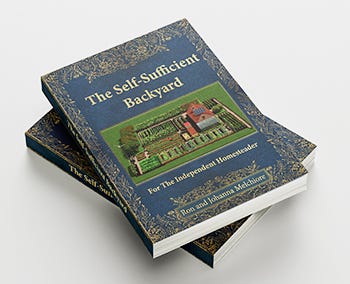
See The Self Sufficient Backyard options →The Self Sufficient Backyard stands out among available guides because it centers on incremental implementation. Rather than assuming you have five acres and unlimited budget, it prioritizes small spaces, common constraints, and realistic timelines. Its structure mirrors the evidence-based approach I've outlined: start with soil, add water catchment, then expand seasonally. This makes it a strong candidate for anyone serious about a self sufficient backyard for beginners.
If you're wondering where to buy self sufficient backyard materials, the guide includes supplier lists and estimated budgets. But the most valuable section may be its month-by-month calendar, which prevents the common mistake of planting everything at once and getting overwhelmed. The self sufficient backyard pdf version includes printable charts for tracking your progress—a feature that matches the "track one metric weekly" recommendation above.

Beyond the Myths: A Sustainable Mindset
The single most important shift you can make is moving from "all or nothing" thinking to "better than last season." A self sufficient backyard that works is one that functions within your actual constraints—time, budget, space, and climate.
Consider these evidence-based benchmarks for your first year:
- Month 1-2: Establish soil and plant first seeds. Expect some failures. Learn watering rhythm.
- Month 3-4: First harvest of greens and radishes. Build one rain barrel. Start compost.
- Month 5-6: Tomato and pepper harvest begins. Learn one preservation method (freezing or canning).
- Month 7-12: Evaluate what worked. Expand by one bed. Plan winter storage crops.
These milestones are achievable for anyone with a small outdoor space and a willingness to try. They don't require certification, expensive tools, or total food independence. They just require action.
See current details and pricing
Learn more about The Self Sufficient Backyard →Conclusion: Start Where You Are
The five myths we've dismantled—about equipment, land, cost, total independence, and expertise—all share one thing. They convince you that you're not ready. And that's the greatest barrier to how to start a self sufficient backyard: believing you need everything figured out before you break ground.
Real self-sufficiency is not a binary state. It's a spectrum. Growing a single tomato plant that feeds your family for a week is self-sufficiency. Collecting rainwater for your window herbs is self-sufficiency. Learning to preserve a surplus of zucchini so you don't buy canned vegetables in January—that's self-sufficiency too.
The most credible guides, like The Self Sufficient Backyard, understand this. They don't sell you a fantasy of wilderness isolation. They sell you a system that works within a modern life, starting from exactly where you stand. If you're ready to replace myths with momentum, that's the resource worth investigating.
Option featured in this guide:
View the The Self Sufficient Backyard offerAffiliate link — our editorial analysis remains independent.
Frequently Asked Questions
This article contains affiliate links. Our editorial analysis remains independent.